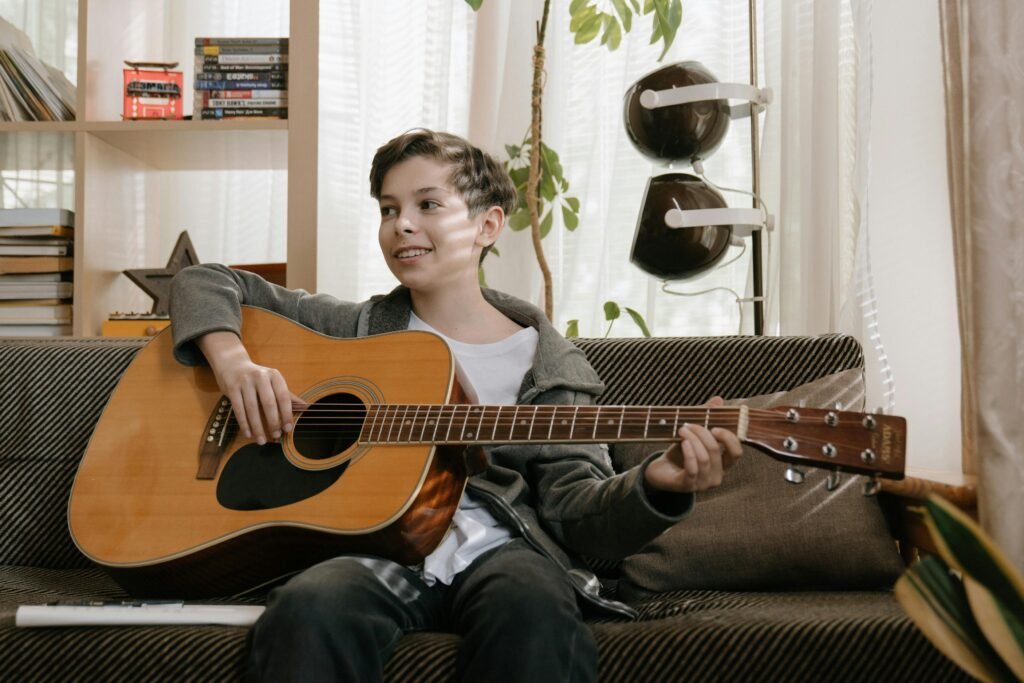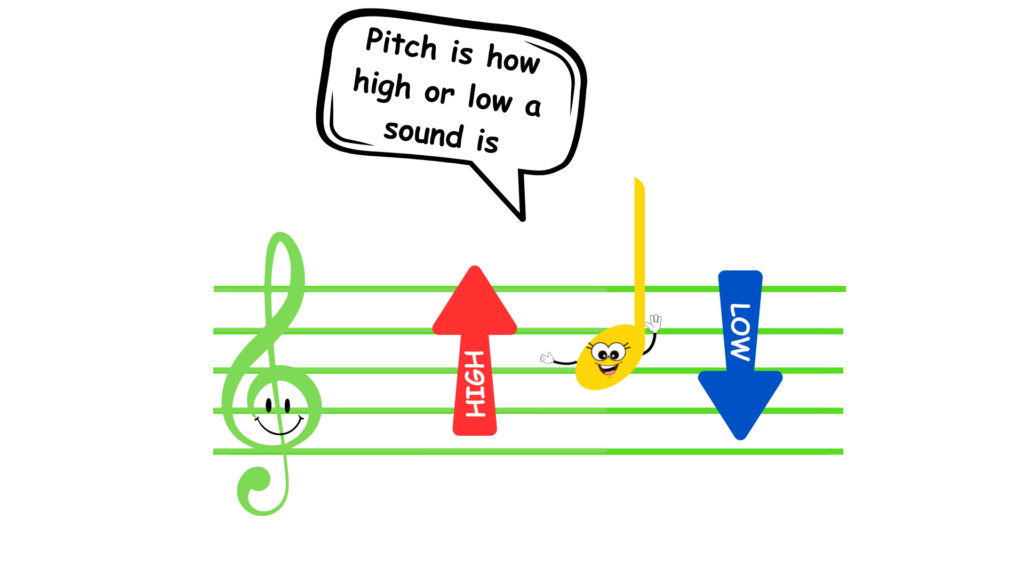
Music sounds can be high or low.
In music, high and low sounds are called pitch.
Pitch helps us hear the difference between deep sounds and bright sounds, and it plays a big role in how music feels and works.
This guide explains pitch in music for kids in a clear, simple, and friendly way.
What Is Pitch in Music?
Pitch means how high or how low a sound is.
- High sounds are thin, light, and bright
- Low sounds are deep, strong, and heavy
Pitch is not about how loud or soft music is.
It is about how high or low the sound feels.
Children understand pitch very naturally because they hear high and low sounds every day.

High Sounds in Music
High sounds often feel:
- light
- bright
- sharp
Examples of high sounds:
- a bird singing
- a whistle
- a high piano note
- a child’s voice
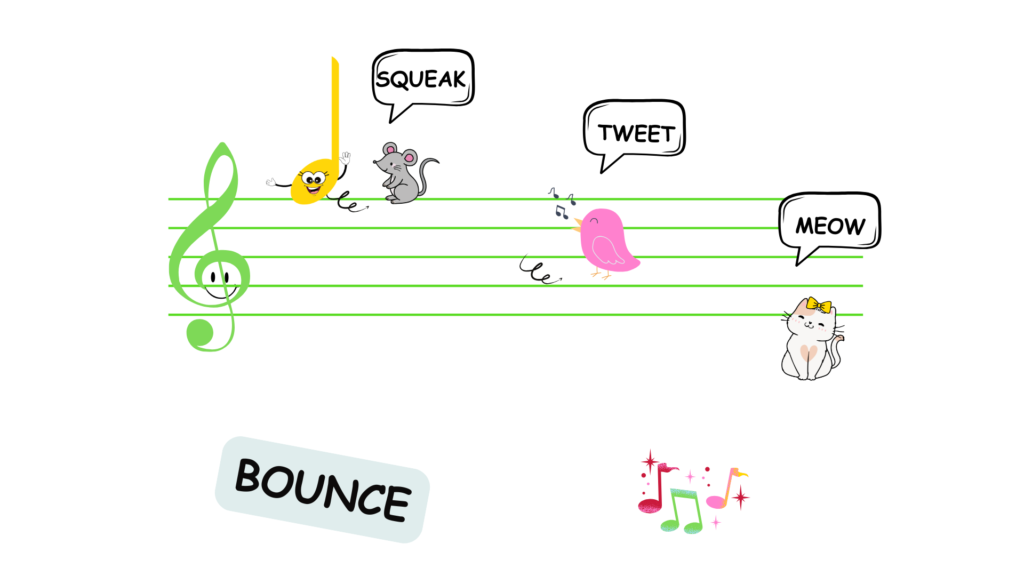
High sounds usually come from shorter or smaller instruments or shorter strings.
🎶 Low Sounds in Music
Low sounds often feel:
- deep
- strong
- heavy
Examples of low sounds:
- thunder
- a big drum
- a low piano note
- an adult’s deep voice
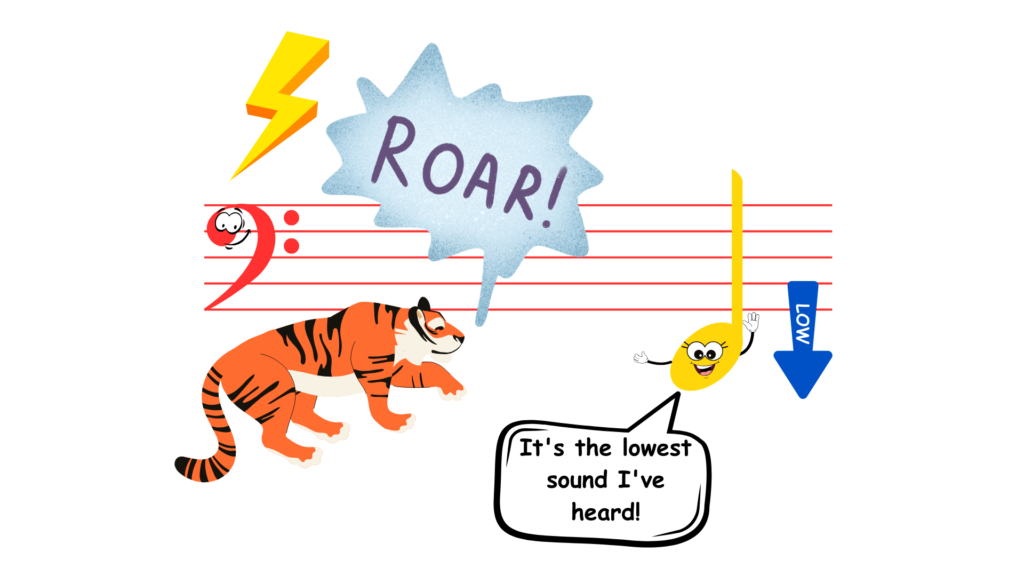
Low sounds usually come from bigger instruments or longer strings.
🧠 How Children Learn Pitch
Children learn pitch best by listening, comparing, and moving.
In real lessons, I often ask:
- “Does this sound high or low?”
- “Which sound is higher?”
- “Which sound is lower?”
Children can usually answer without thinking – pitch is something they can hear and feel easily.
For example, children enjoy sliding their voices up for high sounds and down for low sounds. This helps them connect sound with movement.
🎵 Simple Pitch Activities for Kids
Here are easy activities parents and teachers can use anywhere.
1️⃣ Voice Slide Game
Ask children to slide their voices:
- up for high sounds
- down for low sounds
This helps children feel pitch in their voices.
2️⃣ High or Low Listening Game
Play a sound or note and ask:
- “Is this sound high or low?”
Children can point up for high and down for low.
3️⃣ Movement Match
Invite children to:
- stretch tall for high sounds
- crouch low for low sounds
Movement makes pitch easier to understand.
Why Pitch Is Important in Music
Understanding pitch helps children:
- sing in tune
- recognise melodies
- play instruments more easily
- listen carefully
Pitch also helps children notice patterns in music, which supports confidence and enjoyment.
🎹 Pitch and Learning Instruments
Pitch is very important when learning instruments like:
- piano
- guitar
- ukulele
- flute
- classroom instruments
Children learn that:
- higher notes sound higher
- lower notes sound deeper
This understanding helps children read music and play with confidence.
🌟 Learning Pitch the Smiley Note Way
Watch Pitch Video with Smiley Note
👉 Watch Pitch Videos on YouTube
👉 Subscribe to the Smiley Note YouTube Channel
🎁 Free Music Theory Resources for Kids
Visual tools help children understand music concepts more easily.
You can explore:
- free music theory flashcards
- short learning videos
- Fun Page
👉 Explore Free Music Theory Resources for Kids
Pitch for Parents and Teachers
Parents and teachers don’t need musical training to help children learn pitch.
Simple ideas work best:
- asking children if sounds are high or low
- using voice slides
- connecting sounds with movement
Short, playful activities help children build strong listening skills.
❓ Pitch in Music – FAQs
What is pitch in music?
Pitch is how high or low a sound is.
What age can kids learn about pitch?
Children can explore pitch from a very young age through listening and movement.
Is pitch the same as loud and soft?
No. Pitch is about high and low sounds. Loud and soft sounds are called dynamics. (Read about dynamics in music)
Final Thoughts
Pitch helps children understand how music moves up and down.
When children learn to hear and compare high and low sounds, they become more confident listeners and musicians. Through listening, movement, and gentle guidance, pitch becomes easy to understand and enjoyable to explore.
FREE Colouring Pages – Pitch in Music with Smiley Note
About Me – The Teacher Behind Smiley Note
I’m a music teacher with experience teaching children through childcare music programs, school lessons, and private instrumental teaching. I’ve seen how children learn music best when concepts are explained clearly, visually, and without pressure.
Smiley Note was created from real teaching experience to help children understand music theory in a fun and supportive way — at home, in the classroom, and online.