Music is not only made of sounds.
Music also needs silence.
In music, silence is written using rests. Rests show us when not to play or sing, helping music sound clear, organised, and balanced.
What Are Rests in Music?
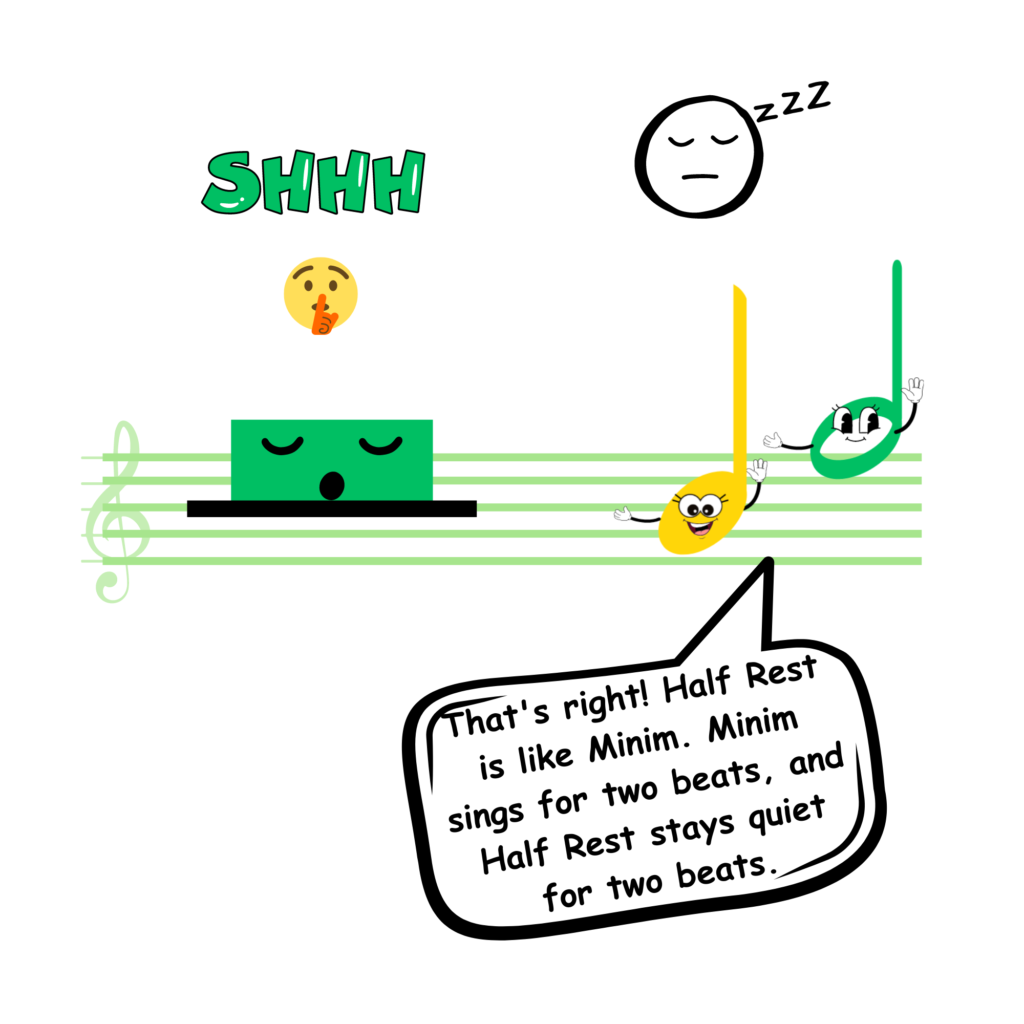
Rests are symbols that show quiet moments in music.
They tell us:
- when to stop playing
- how long the silence lasts
- when to start again
Just like notes show sound, rests show silence.
Children often understand this quickly when rests are explained as music taking a breath.
Why Are Rests Important in Music?
Without rests, music would sound:
- messy
- rushed
- confusing
Rests help music:
- feel organised
- sound clearer
- give space between sounds
In lessons, I often explain rests as quiet pauses that help music make sense.
Silence Is Part of Music
Children sometimes think music must always make sound.
Learning about rests helps them understand that silence is part of music too.
For example:
- pausing between words when speaking
- taking a breath while singing
- stopping before starting again
These everyday ideas help children understand why rests are important.
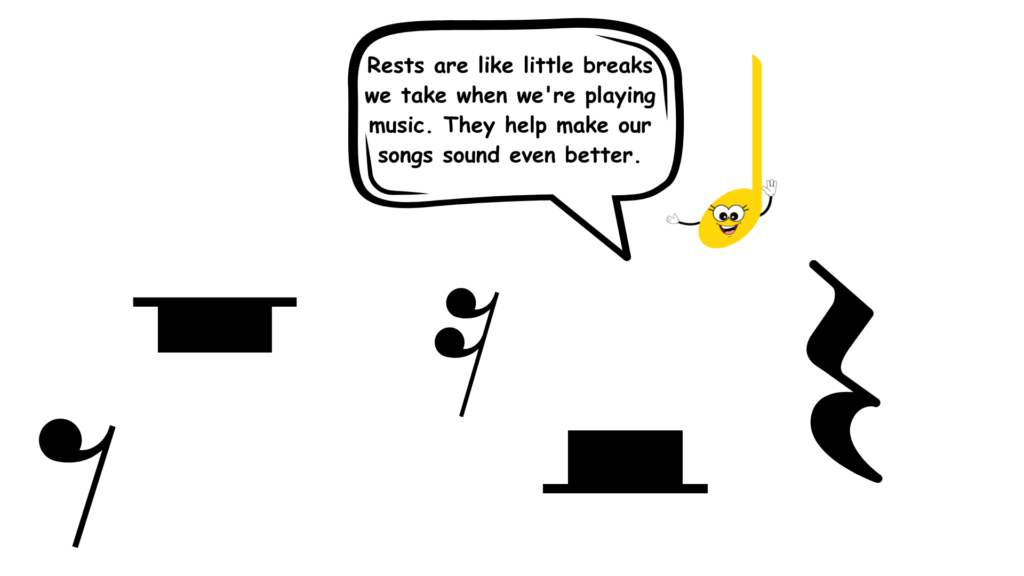
What Do Rests Look Like?
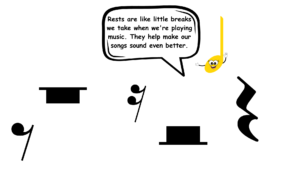
Just like notes, rests have different symbols.
Each rest shows how long the silence lasts.
At the beginning, children don’t need to memorise names — recognising that rests mean stop and wait is enough.
Over time, children become familiar with different rest shapes naturally.
How Kids Learn About Rests
From my teaching experience, children learn rests best through movement and games.
We often:
- clap and stop
- play and freeze
- sing and pause
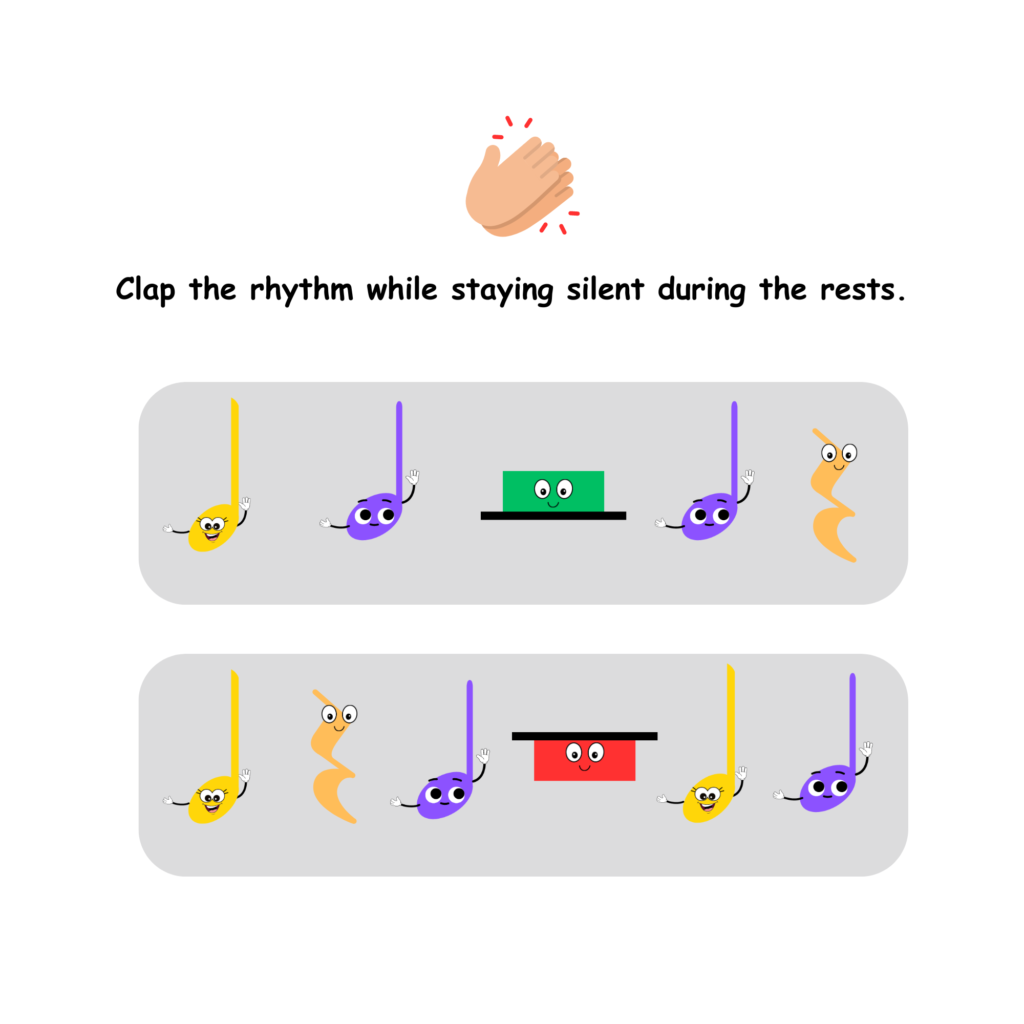
For example, children clap a rhythm and then freeze when a rest appears. This helps them feel how silence fits into music.
Simple Rest Activities for Kids
Here are easy activities parents and teachers can use.
1️⃣ Clap and Rest
Clap a simple rhythm.
When you show a rest, everyone stops clapping and stays still.
This helps children:
- control movement
- listen carefully
- understand silence
2️⃣ Freeze Game
Play music and let children move.
Pause the music and ask them to freeze.
Explain that the pause is like a rest in music.
3️⃣ Sing and Stop
Sing a familiar song and pause suddenly.
Children learn to wait and listen for when the music starts again.
Rests and Rhythm
Rests are closely connected to rhythm.
They help rhythm:
- feel balanced
- stay organised
- sound clear
Without rests, rhythms would feel too full and difficult to follow.
Rests and Learning Instruments
When children learn instruments like:
- piano
- guitar
- ukulele
- classroom percussion
they need to know when to play and when to stop.
Understanding rests helps children:
- stay in time
- play more confidently
- avoid rushing
Even simple awareness of rests makes playing music easier.
🌟 Learning Rests the Smiley Note Way
👉 Learn more about Music Theory for Kids with the Smiley Note
In Smiley Note videos, rests are introduced as music symbols that show silence.
Children learn to recognise rest symbols and understand that they mean stop, wait, and listen. The focus is not on memorising names, but on seeing how rests fit into music alongside notes.
🎁 Free Music Theory Resources for Kids
Visual tools help children understand music concepts more easily.
You can explore:
- free music theory flashcards
- beginner-friendly visuals
- short learning videos
👉 Explore Free Music Theory Resources for Kids
Rests for Parents and Teachers
Parents and teachers don’t need musical training to teach rests.
Simple ideas work best:
- stopping and starting together
- waiting quietly
- turning pauses into games
Short, playful activities help children understand that silence is an important part of music.
❓ Rests in Music – FAQs
What are rests in music?
Rests are symbols that show silence in music.
Why do children need to learn rests?
Rests help children play music clearly and stay in time.
Do kids need to memorise rest names?
No. Children do not need to memorise rest names at the beginning.
What matters most is that children understand what the symbol means – that it shows a quiet moment or a pause in the music. Learning to stop, wait, and listen is more important than remembering the name of the rest.
Over time, becoming familiar with rest symbols is very helpful and supports reading music more confidently. Knowing the symbols makes it easier for children to follow music and play together with others. Names can be introduced gradually, when children are ready, without pressure.
Final Thoughts
Rests teach children that music is not only about sound — it is also about listening and waiting.
When children learn to pause and feel silence, music becomes clearer and more expressive. Through simple games and gentle guidance, rests become a natural and enjoyable part of music learning.
About Me – The Teacher Behind Smiley Note
I’m a music teacher with experience teaching children through childcare music programs, school lessons, and private instrumental teaching.