When children start learning music, they soon notice some notes have special signs next to them.
These signs are called sharps and flats.
Sharps and flats help music sound interesting and help notes move slightly higher or slightly lower. This guide explains sharps and flats for kids in a clear, simple way.
What Are Sharps and Flats in Music?
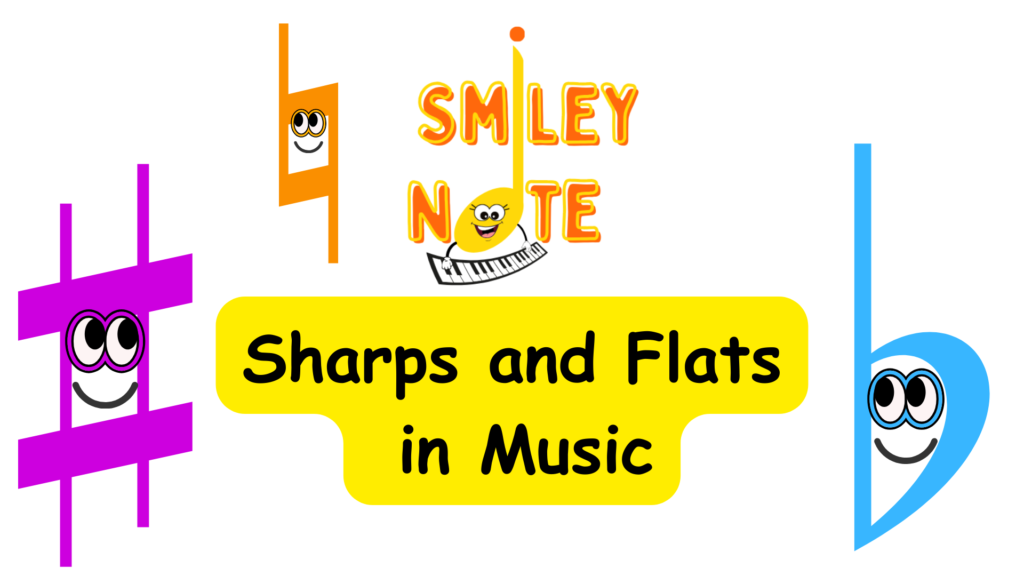
Sharps and flats are music symbols that change a note.
- A sharp (♯) makes a note sound higher
- A flat (♭) makes a note sound lower
The change is small, but important. Sharps and flats help music have more colour and expression.
Children don’t need to memorise everything straight away – understanding higher and lower is the first step.
What Does a Sharp Mean?
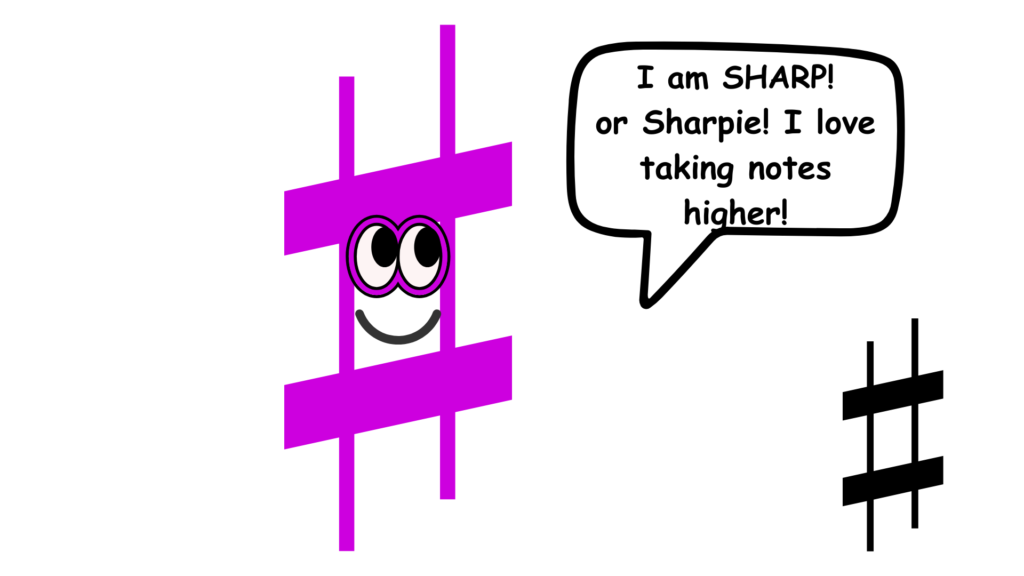
A sharp tells us to play a note a little higher than usual.
For example:
- If a note has a sharp sign, we move up slightly
- The sound becomes brighter or higher
In lessons, I often explain a sharp as:
“The note is climbing up.”
Children can show this by moving their hands or voices upward.
What Does a Flat Mean?
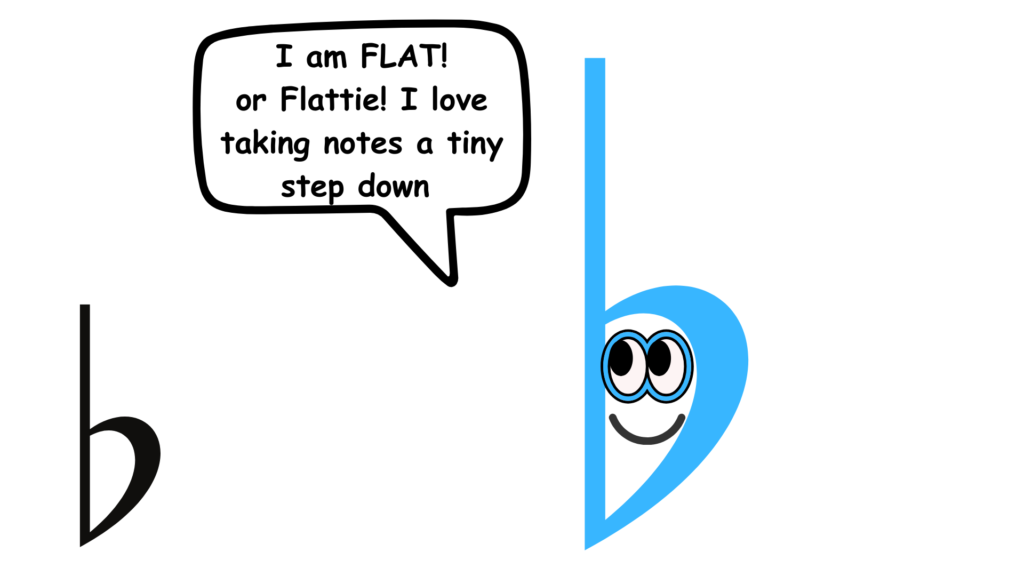
A flat tells us to play a note a little lower than usual.
For example:
- If a note has a flat sign, we move down slightly
- The sound becomes deeper or lower
I often explain a flat as:
“The note is sliding down.”
This helps children connect sound with movement.
♮ What Is a Natural Sign in Music?
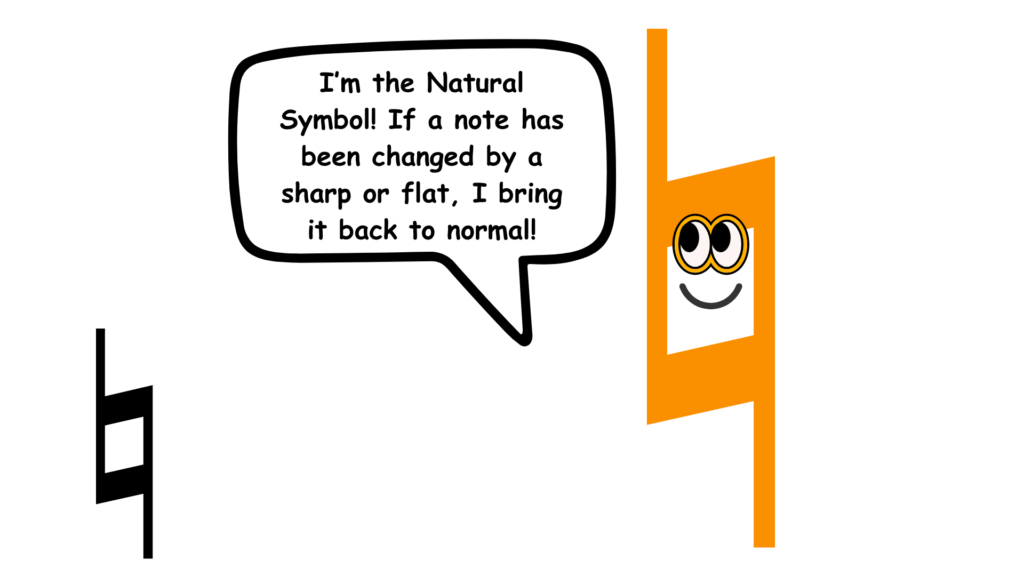
Sometimes a note has been changed by a sharp or a flat, and then the music needs to go back to the original note.
That’s when we use a natural sign (♮).
The natural sign tells us:
- play the note normally again
- cancel the sharp or flat
- go back to the original sound
I often explain it to children as:
“The note is back to normal.”
This helps children understand that the natural sign doesn’t make a note higher or lower — it simply removes the sharp or flat.
Why Music Uses Sharps and Flats
Sharps and flats help music:
- sound more interesting
- move smoothly between notes
- avoid sounding the same all the time
Without sharps and flats, music would feel limited. These symbols give composers and musicians more choices.
🎼 Where Do Sharps and Flats Appear?
Sharps and flats usually appear:
- before a note on the music staff
- sometimes at the beginning of the music
Children don’t need to worry about rules yet. Noticing the symbol and remembering that it changes the note is enough at the beginning.
How Kids Learn Sharps and Flats
From teaching experience, children learn sharps and flats best when learning is visual and playful.
We often:
- listen to the note before and after the change
- move hands up for sharps and down for flats
- use simple words like higher and lower
Children do not need to memorise note names right away. Understanding the direction of sound is the key idea.
🎵 Simple Sharp and Flat Activities for Kids
Here are easy activities parents and teachers can use.
1️⃣ Voice Slide Game
Ask children to slide their voice:
- up for a sharp
- down for a flat
This helps them feel the difference in pitch.
2️⃣ Hand Movement Game
Play or sing a note.
- Raise hands for sharper (higher) sounds
- Lower hands for flatter (lower) sounds
Movement makes the idea clearer.
3️⃣ Listening Game
Play two notes close together.
Ask:
- “Which one sounds higher?”
- “Which one sounds lower?”
This trains careful listening.
Sharps, Flats, and Pitch
Sharps and flats are closely connected to pitch.
- Sharps raise the pitch
- Flats lower the pitch
Understanding this connection helps children make sense of note reading later on.
👉 PITCH in Music for Kids – READ MORE
🎹 Sharps and Flats on Instruments
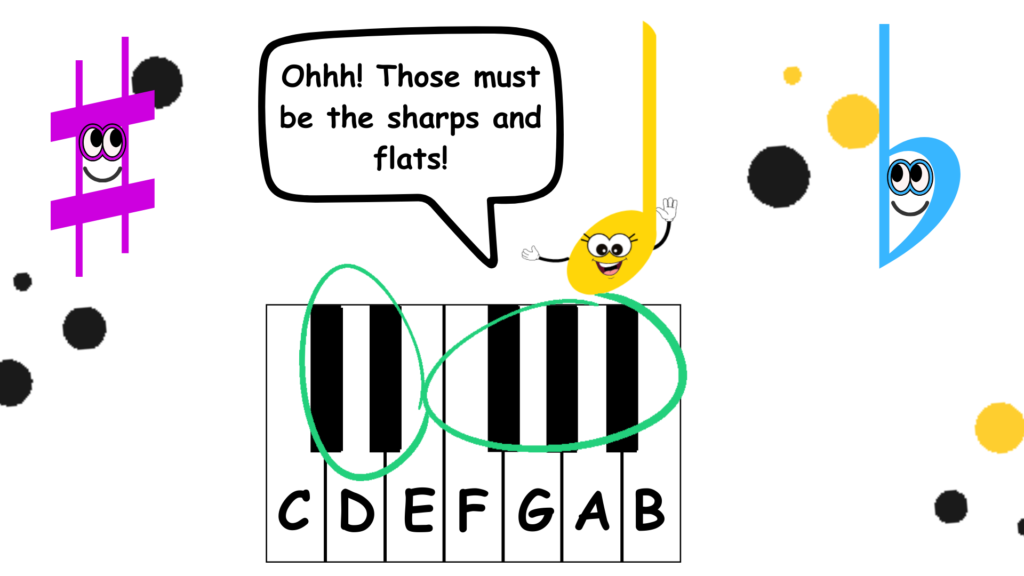
When children play instruments like:
- piano
- guitar
- ukulele
- flute
they will see and hear sharps and flats often.
Understanding that these symbols change notes helps children:
- feel less confused
- read music more confidently
- play with better accuracy
🌟 Learning Sharps and Flats the Smiley Note Way
In Smiley Note lessons and videos, sharps and flats are introduced as music symbols.
Children learn to:
- recognise the symbols
- understand that they change notes
- connect what they see with what they hear
The focus is on understanding, not memorising. Over time, sharps and flats become familiar and easy to recognise.
📺 Watch Sharps and Flats Videos with Smiley Note
Seeing sharps and flats in action helps children understand them more easily.
👉 Learn more about Music Theory for Kids with the Smiley Note
On the Smiley Note YouTube channel, children can watch short videos that explain sharps and flats using visuals, symbols, and friendly explanations.
👉 Watch Sharps and Flats Videos on YouTube
👉 Subscribe to the Smiley Note YouTube Channel
🎁 Free Music Theory Resources for Kids
Visual tools help children understand music symbols more clearly.
You can explore:
- free music theory flashcards
- beginner-friendly visuals
- short learning videos
👉 Explore Free Music Theory Resources for Kids
Sharps and Flats for Parents and Teachers
Parents and teachers don’t need musical training to introduce sharps and flats.
Simple ideas work best:
- talk about notes going higher or lower
- use voice and movement
- keep learning relaxed and playful
Short, positive experiences help children build confidence.
❓ Sharps and Flats – FAQs
What are sharps and flats in music?
Sharps and flats are symbols that change a note by making it higher or lower.
Do kids need to memorise sharps and flats?
No. Understanding what the symbol does is more important than memorising names.
Are sharps and flats hard for kids?
When explained simply and visually, sharps and flats are very manageable for children.
Final Thoughts
Sharps and flats help music move and change.
When children learn that these symbols make notes go up or down, music becomes easier to understand and more interesting to play. With simple explanations, movement, and listening, sharps and flats become a natural part of learning music.
About Me – The Teacher Behind Smiley Note
I’m a music teacher with experience teaching children through childcare music programs, school lessons, and private instrumental teaching. I’ve seen how children learn music best when concepts are explained clearly, visually, and without pressure.
Smiley Note was created from real teaching experience to help children understand music theory in a fun and supportive way — at home, in the classroom, and online.