When children start learning music, they often notice two numbers at the beginning of a song.
These numbers are called a time signature.
Time signatures help us understand how music is organised, how many beats are in each bar, and how music flows. When explained clearly, time signatures are not confusing at all — they simply help music make sense.
What Is a Time Signature in Music?
A time signature tells us how music is counted.
It helps us know:
- how many beats are in each bar
- how the beats are grouped
- how to keep music steady and organised
Time signatures appear at the very beginning of a piece of music, right after the clef.
Children don’t need to calculate or memorise rules. The goal is to recognise that these numbers help organise the music.
What Do the Numbers Mean?
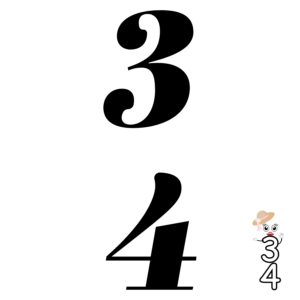
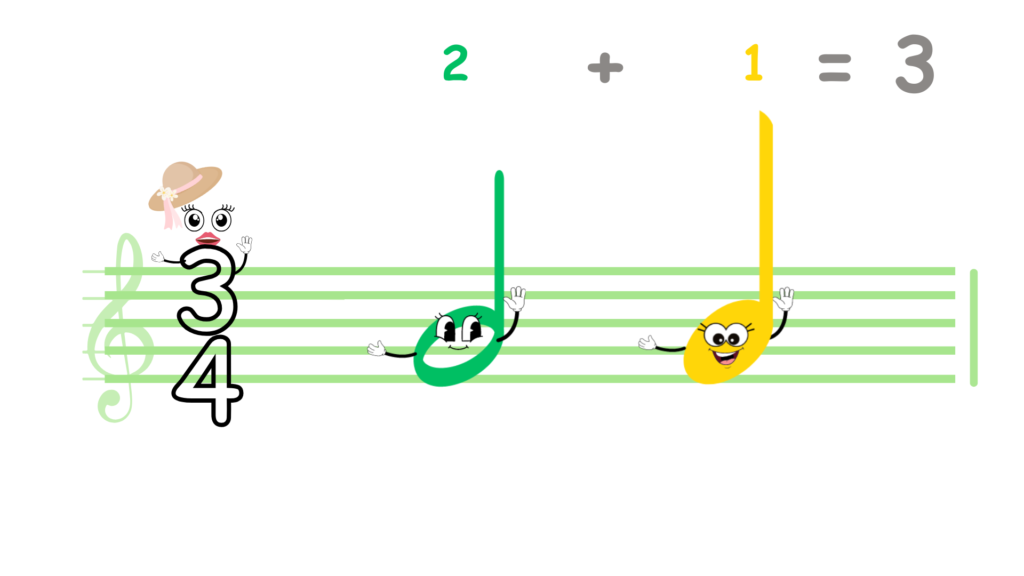
A time signature is written as two numbers, one on top of the other.
The top number
The top number tells us:
- how many beats are in one bar
For example:
- 4 means four beats
- 3 means three beats
The bottom number
The bottom number tells us:
- what kind of note gets one beat
At the beginning, children don’t need to remember note names. It’s enough to know that the bottom number helps decide how the beat is counted.
🎵 What Is a Bar in Music?
A bar (also called a measure) is a small section of music.
Bars help music:
- stay organised
- feel steady
- be easier to read and play
Bar lines separate the music into these small sections, making counting much easier.
🎼 Common Time Signatures Children See
Some time signatures appear very often in beginner music.
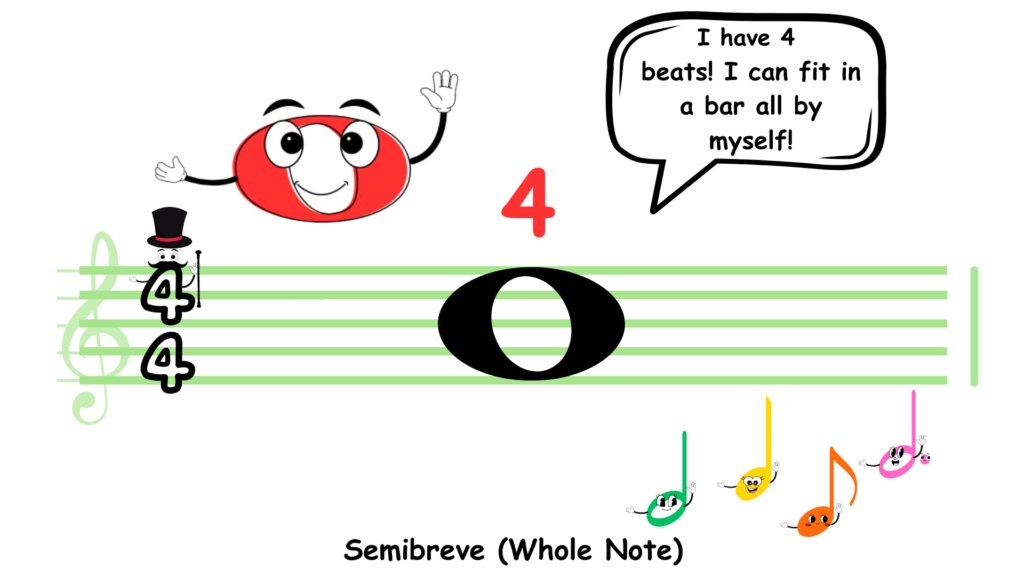
4/4 Time
- Four beats in each bar
- Feels steady and balanced
- Very common in songs
3/4 Time
- Three beats in each bar
- Often feels like a gentle pattern
- Used in many flowing songs
Children don’t need to memorise these names — recognising the numbers and feeling the beat is enough.
How Children Learn Time Signatures
Children learn time signatures best through counting, clapping, and movement.
In lessons, I often:
- clap the beats in a bar
- count out loud together
- step or move to the beat
For example, clapping 1-2-3-4 helps children feel four beats in a bar without needing to explain theory.
Simple Time Signature Activities for Kids
Here are easy activities parents and teachers can use.
1️⃣ Clap the Bar
Clap and count together:
- 4 claps for 4 beats
- 3 claps for 3 beats
This helps children feel how beats fit into each bar.
2️⃣ Walk the Beats
Walk around the room while counting beats.
Stop at the end of the bar, then start again.
This helps children feel how music moves in groups.
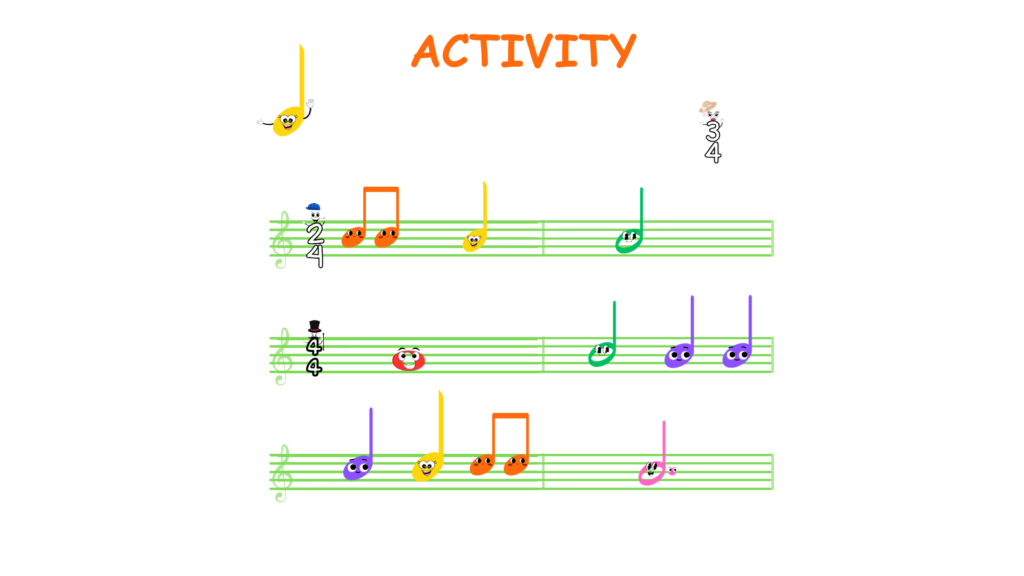
3️⃣ Build a Bar Game
Tap or clap a short pattern.
Count the beats and check if they fit into one bar.
This builds early rhythm awareness.
🎹 Time Signatures and Learning Instruments
Understanding time signatures helps children when learning instruments such as:
- piano
- guitar
- ukulele
- classroom percussion
Time signatures help children:
- know when to count
- stay in time
- play together with others
When children recognise time signatures, music feels more predictable and less confusing.
Learning Time Signatures the Smiley Note Way
In the Smiley Note approach, time signatures are introduced as music symbols that organise beats.
Children learn to:
- recognise the numbers
- understand that music is grouped into bars
The focus is on familiarity and recognition, not memorising rules. Over time, time signatures become easy to spot and understand.
👉 Learn more about Music Theory for Kids with the Smiley Note Method
📺 Watch Time Signature Videos with Smiley Note
Seeing time signatures in action helps children understand them more clearly.
On the Smiley Note YouTube channel, children can watch short videos that show how beats fit into bars using visuals, movement, and simple explanations.
👉 Subscribe to the Smiley Note YouTube Channel
🎁 Free Music Theory Resources for Kids
Visual tools help children recognise music symbols more easily.
You can explore:
- free music theory flashcards
- beginner-friendly visuals
- short learning videos
👉 Explore Free Music Theory Resources for Kids
Time Signatures for Parents and Teachers
Parents and teachers don’t need musical training to introduce time signatures.
Helpful ideas include:
- counting beats together
- clapping and moving
- keeping learning short and relaxed
Recognition and repetition are more important than explanation.
❓ Time Signatures – FAQs
What is a time signature in music?
A time signature tells us how many beats are in each bar of music.
Do kids need to memorise time signatures?
No. Recognising the numbers and feeling the beat is enough at the beginning.
What is the easiest time signature for kids?
4/4 time is usually the easiest because it feels steady and balanced.
Final Thoughts
Time signatures help music feel organised and steady.
When children learn to recognise time signatures and feel how beats are grouped, music becomes easier to follow and more enjoyable to play. With simple counting, movement, and repetition, time signatures become a natural part of music learning.
About Me – The Teacher Behind Smiley Note
I’m a music teacher with experience teaching children through childcare music programs, school lessons, and private instrumental teaching. I’ve seen how children learn music best when ideas are introduced clearly, visually, and without pressure.
Smiley Note was created from real teaching experience to help children recognise and understand music theory in a friendly and supportive way – at home, in the classroom, and online.