What Is Rhythm in Music?
Rhythm in music is the pattern of long and short sounds we hear and play in a song.
Rhythm tells us:
- When to play
- How long to play a sound
- When to stop and listen
If music were a story, rhythm would be the heartbeat that keeps everything moving.
👏 Rhythm Is Like Clapping and Walking

Children usually understand rhythm very easily because rhythm is already part of their everyday life.
They feel rhythm when they clap their hands, tap their feet, walk, run, or even say words out loud. Songs, rhymes, and chants all have rhythm too.
Because children experience rhythm naturally through movement and speech, it is often one of the first music concepts they understand.
Long and Short Sounds in Music
Rhythm is made of long sounds and short sounds.
For example:
- A long sound can feel like “taaaa”
- A short sound can feel like “ta”
Children learn to hear the difference between these sounds by listening, copying simple patterns, and repeating rhythms through movement and play. Over time, this helps them recognise patterns in music and build a strong foundation for learning songs and instruments.
Why Rhythm Is Important for Kids
Learning rhythm helps children:
- keep a steady beat
- play instruments more easily
- sing with better timing
- listen carefully and focus
Beyond music, rhythm supports important skills such as coordination, memory, and early maths concepts like counting and recognising patterns.
How Rhythm Is Taught to Children

Rhythm is best taught in a fun, playful way, especially for young learners.
Children often learn rhythm through:
- clapping games
- tapping instruments
- movement and dancing
- simple rhythm words
- visual aids
For example, clapping your child’s name helps them feel rhythm naturally — Ma-ry (two claps), A-lex-an-der (four claps).
A song played slowly can feel calm and gentle, while the same song played fast can feel exciting and energetic.
Short activities work best — even a few minutes can make a big difference.
Rhythm and Learning Instruments
Understanding rhythm helps children when they start learning instruments like:
- piano
- guitar
- ukulele
- classroom percussion
When children understand rhythm, they:
- feel more confident
- stay in time more easily
- enjoy playing music more
Rhythm is a skill that grows with practice and encouragement.
Learning Rhythm the Fun Way
With the Smiley Note Method, rhythm is introduced:
- slowly and clearly
- using visuals and characters
- through short, engaging activities
- without pressure or exams
Children learn rhythm by feeling and doing, not by memorising rules.
👉 Learn more about music theory for kids with the Smiley Note Method

🎁 Free Rhythm Resources for Kids
If your child is just starting, free visual resources can help make rhythm easier to understand.
You can explore:
- free music theory flashcards
- beginner-friendly rhythm activities
- short learning videos
If your child is learning rhythm, visual tools can really help.
You can explore free rhythm flashcards and short rhythm videos designed for young beginners.
Rhythm for Parents and Teachers
Parents and teachers don’t need a music background to help children learn rhythm.
Simple ideas include:
- clapping together
- repeating simple patterns
- using everyday words or names
- keeping activities short and playful
Rhythm learning should always feel positive and encouraging.
As a music teacher, I’ve seen that children understand rhythm best when it’s part of everyday play.
When I worked with music programs in childcare centres, rhythm activities were always simple, short, and active.
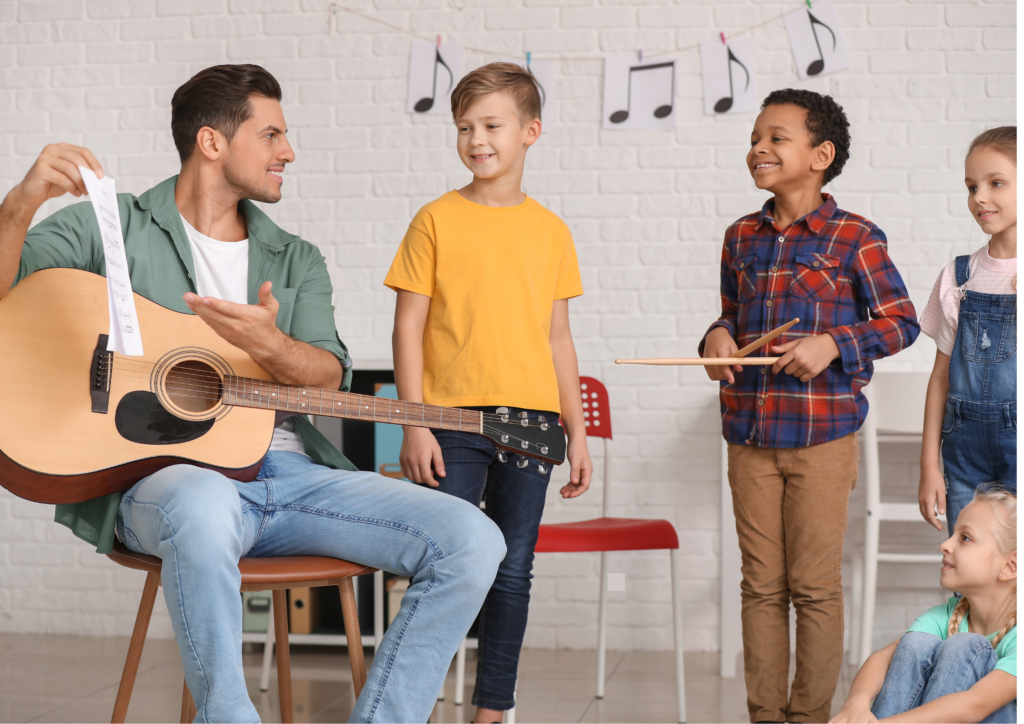
One activity I often used was clapping children’s names. Each name has its own natural rhythm, and children love hearing and copying it. Another favourite was clapping or tapping a short pattern and letting the children repeat it back. This quickly became a listening game, even for very young learners.
Movement was always important too. Walking, marching, or gently moving to music helped children feel the beat in their bodies. Slow music meant slow steps, and faster music naturally led to quicker movement. Even tapping knees or the floor while counting aloud helped children connect rhythm with action.
These small, playful activities worked well because they felt natural and pressure-free. Children didn’t feel like they were “learning music theory” – they were simply enjoying music, and rhythm developed naturally through movement, listening, and repetition.

About the Teacher Behind Smiley Note
I’m a music teacher with experience running music programs in childcare centres, primary schools, and private lessons. Over the years, I’ve worked with many young children and seen how music theory works best when it’s taught through movement, play, and simple activities.
👉 Learn more about Smiley Note and my teaching approach
Rhythm in Music – FAQs
What age can children start learning rhythm?
Most children can start learning basic rhythm from around age 4–5, depending on attention span. Many children naturally feel rhythm even earlier through movement and play.
Do children need to read music to learn rhythm?
No. Rhythm can be learned through listening, clapping, movement, and visual activities before reading music notation.
Is rhythm important before learning an instrument?
Yes. Rhythm helps children feel more confident and makes learning instruments much easier and more enjoyable.
Final Thought
Rhythm is the foundation of all music.
When children understand rhythm in a fun and supportive way, they build confidence, coordination, and a lifelong connection to music.