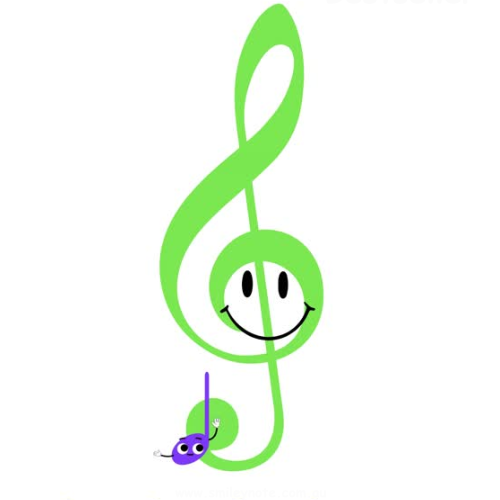
The treble clef is one of the first music symbols children see when they start learning music. It may look curly and a little mysterious at first, but once it’s explained clearly, it becomes very easy to recognise and understand.
In this guide, I’ll explain the treble clef in a simple, child-friendly way, based on how I teach it in real lessons.
What Is the Treble Clef?
The treble clef is a symbol used in music to show higher sounds.
It appears at the beginning of a music staff and tells us that the notes written after it are higher-sounding notes. Many instruments and voices use the treble clef, especially when playing or singing higher pitches.
Children don’t need to memorise this straight away. The first step is simply recognising the treble clef as a sign that helps music make sense.

Why Is It Called the Treble Clef?
The word treble means high.
So when children see the treble clef, they can remember:
Treble clef = higher sounds
This simple connection helps children feel confident instead of confused. Over time, they naturally learn that different clefs help organise music into higher and lower sounds.
What Does the Treble Clef Do?
The treble clef helps us:
- know where notes belong on the staff
- understand how high or low a note sounds
- read and play music more easily
Without the treble clef, music notes would not make sense on the page. It acts like a guide, showing us how to read the notes correctly.
🎼 Where Is the Treble Clef Placed?
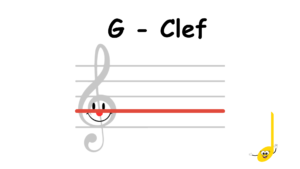
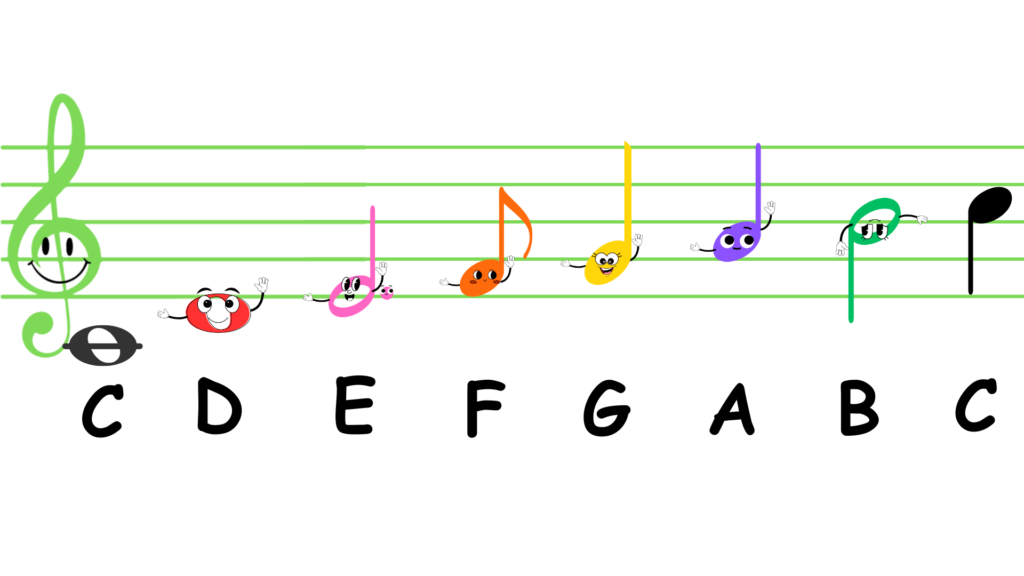
The treble clef is always written at the far left of the music staff.
It wraps around one of the staff lines, helping to organise the notes that follow. Children don’t need to remember which line straight away – noticing the shape and position is enough at the beginning.
Learning music is about familiarity first, details later.
Which Instruments Use the Treble Clef?
Many common beginner instruments use the treble clef.
These include:
- piano (right hand)
- guitar
- ukulele
- flute
- violin
- singing voices
This is why the treble clef is often the first clef children learn. It appears in many beginner music books and songs.
🎵 How Kids Learn the Treble Clef
From my teaching experience, children learn the treble clef best when it is introduced slowly and visually.
In lessons, we often:
- notice the treble clef at the start of the music
- talk about it as a “sign for higher sounds”
- see it again and again in songs and activities
Children don’t need to memorise note names straight away. Simply recognising the treble clef and understanding its purpose is a strong first step.
Learning the Treble Clef the Smiley Note Way
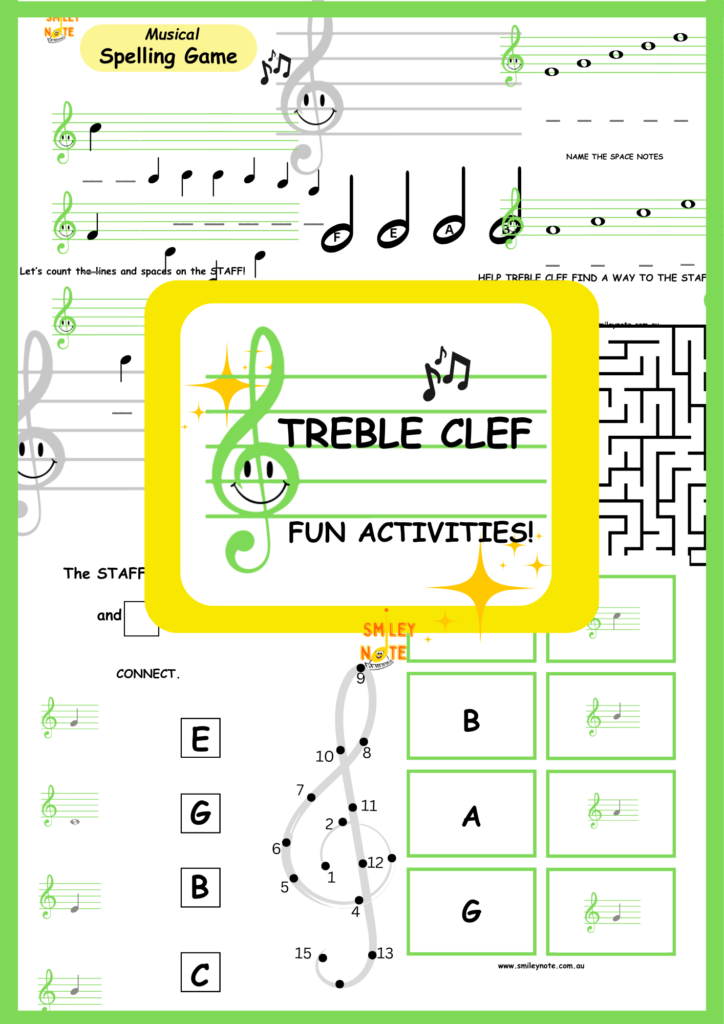
When I teach the treble clef, I keep things calm and simple. Children first learn to recognise the shape and notice where it appears at the beginning of the music.
I use clear visuals and friendly characters to help children remember what the treble clef means. We talk about it often, see it again and again in songs, and gently revisit it through short activities or Treble Clef Music Flashcards.
There is no pressure to memorise or get everything right straight away. Over time, the treble clef becomes familiar, and children begin to understand it naturally as part of reading music.
👉 Learn more about Music Theory for Kids with the Smiley Note Method
Watch Treble Clef Videos with Smiley Note
Seeing the treble clef in action helps children understand it more easily.
On the Smiley Note YouTube channel, children can watch short, beginner-friendly videos that explain the treble clef using visuals, movement, and simple language.
These videos:
- support what children see on the page
- reinforce learning through repetition
- suit different learning styles
👉 Watch Treble Clef Videos on YouTube
👉 Subscribe to the Smiley Note YouTube Channel
Free Treble Clef Resources for Kids
Visual tools can make learning the treble clef easier and more enjoyable.
You can explore:
- free music theory flashcards
- simple treble clef visuals
- short learning videos
👉 Explore Free Music Theory Resources for Kids
Treble Clef for Parents and Teachers
Parents and teachers don’t need a strong music background to support children learning the treble clef.
In real lessons, simple approaches work best. Pointing out the treble clef at the start of a song, noticing its shape, or reminding children that it shows higher sounds are easy ways to support understanding.
Keeping learning relaxed and encouraging helps children feel confident as they begin reading music.
❓ Treble Clef – FAQs
What age can kids learn the treble clef?
Many children are ready to learn about the treble clef from around age 5–7, depending on interest and attention span.
Do kids need to memorise treble clef notes straight away?
No. Recognising the treble clef and understanding what it represents is more important than memorising note names at the beginning.
Is the treble clef hard for kids to learn?
When explained simply and revisited often, the treble clef is very manageable for young learners.
Final Thoughts
The treble clef is not something children need to rush or memorise.
It is simply a starting sign that helps music make sense. When children learn to recognise the treble clef and understand that it represents higher sounds, they build confidence and curiosity about music reading.
With gentle explanations, visual support, and positive experiences, the treble clef becomes familiar and friendly — supporting children as they sing, play instruments, and enjoy music.
About Me – The Teacher Behind Smiley Note
I’m a music teacher with experience teaching children through childcare music programs, school-based lessons, and private instrumental teaching. Over the years, I’ve seen that children learn music best when concepts are explained clearly, visually, and without pressure.
Smiley Note was created from real teaching experience to help children understand music theory in a fun, supportive way — whether learning happens at home, in the classroom, or through online resources.
👉 Learn more about Smiley Note and my teaching approach