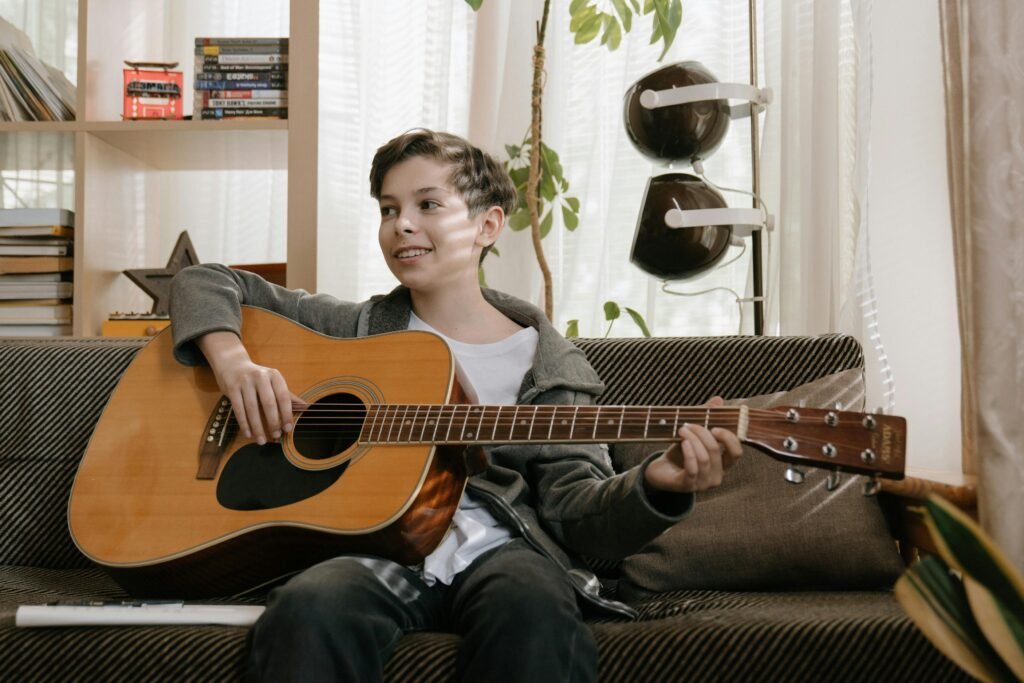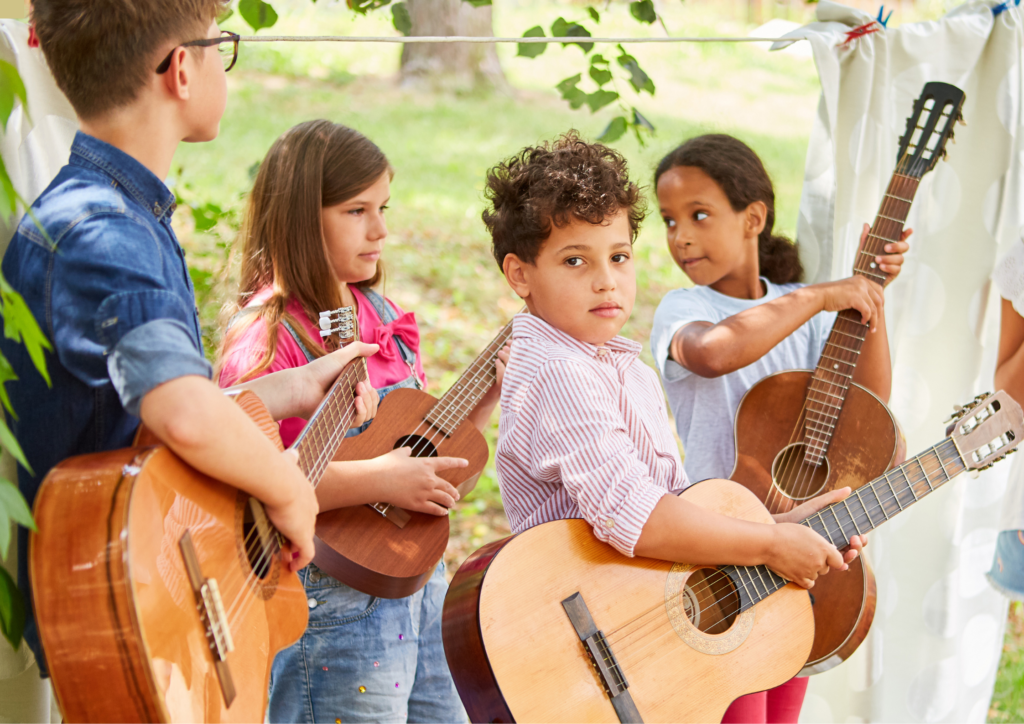
The benefits of group music lessons go far beyond just learning notes — for many children, they’re actually the best way to start. Over the years of teaching piano, guitar, ukulele, and flute in schools, I’ve learned that some kids simply thrive when they learn in groups rather than in private lessons.
When I first started teaching, I believed one-on-one lessons were the only path to real progress. But once I began leading group music lessons for kids, I quickly noticed something different — children were more confident, more engaged, and far more relaxed. They laughed, listened to each other, and learned faster because the environment felt safe and social.
In my small group instrumental lessons, students discover that learning an instrument can be fun and shared. Whether it’s a group guitar class, a beginner piano pair, or a ukulele club, children build skills through teamwork, rhythm games, and friendly motivation. Some students who struggled alone suddenly start practising happily — simply because they enjoy playing alongside others.
Group music learning brings joy, connection, and progress together. In this article, I’ll explain why these lessons work so well for many children, how I structure my groups to keep them motivated, and why group music lessons can sometimes be the key to unlocking a child’s love for music.
Why Some Kids Learn Better in Groups
Every child learns differently. Some need quiet focus and one-on-one attention, but others learn best when surrounded by energy, laughter, and teamwork. That’s why group music lessons often work better for many kids — especially at the primary school level.
In a group instrumental lesson, children realise they’re not alone in the learning process. If one student struggles with a new chord, someone else might master it first and help their friend. This shared learning builds a sense of support and belonging that private lessons sometimes can’t offer. I’ve seen shy children completely change once they join a group — suddenly, they’re talking, laughing, and trying new things without fear of being wrong.
Group lessons take away the pressure of performing for just the teacher. Instead, the focus shifts to playing with others — listening, adjusting, and learning together. Whether it’s group guitar lessons, piano duets, or ukulele ensembles, children stay more relaxed and open to learning because the experience feels like a fun team activity, not a test.
In my own teaching, I’ve noticed that kids who might give up in private lessons often stay committed and excited in group settings. They look forward to seeing their friends each week, and that social connection keeps their motivation strong. For many, this is where their true love of music begins.
Builds Confidence and Motivation
One of the biggest reasons I love group music lessons is the way they build confidence and motivation — even in students who once doubted they could learn an instrument. When children play together, they learn that music is not just about getting every note right; it’s about enjoying the process and growing step by step.
In my group guitar and ukulele lessons, I often see shy or quiet students begin to shine. At first, some barely strum or hesitate to join in. But as the group starts playing familiar rhythms or simple songs together, something changes — they relax, smile, and start to play louder. When one student masters a new chord, the others cheer and want to try it too. That sense of teamwork turns learning into something exciting instead of stressful.
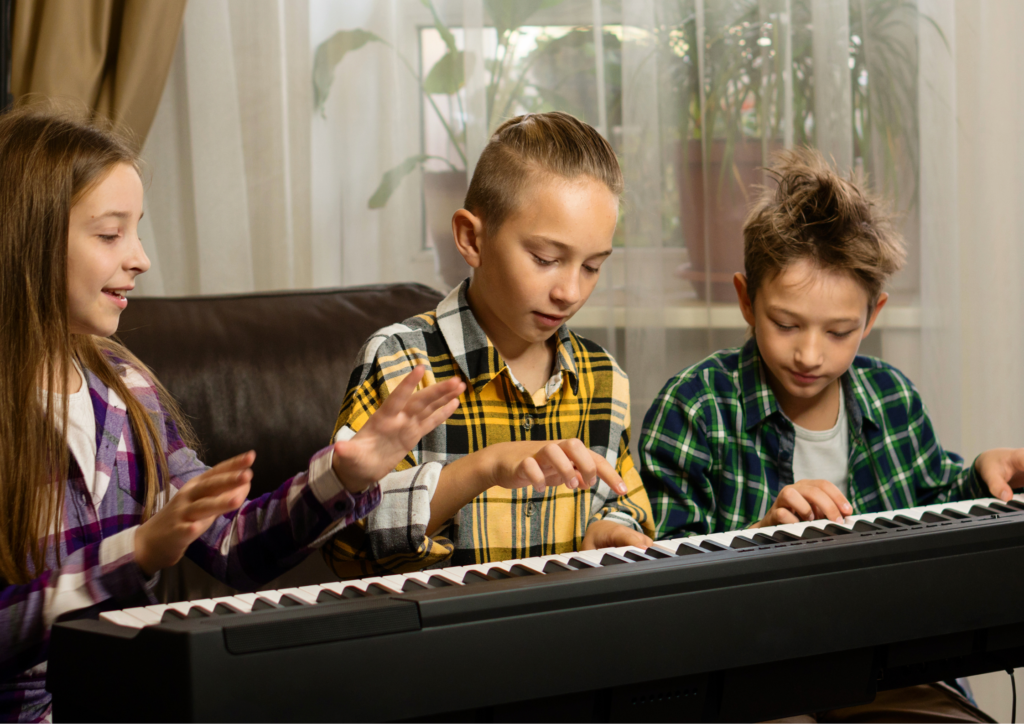
In group piano lessons, children also feel proud when they can play a short duet or keep a steady rhythm with their partner. Each little success boosts their confidence and reminds them that progress doesn’t have to be perfect — it just has to be fun and consistent.
I’ve noticed that many students who struggled to stay motivated in private lessons find it much easier to stay engaged in a group. They enjoy being part of a small “band,” helping each other, and celebrating together. Learning becomes more than practice — it becomes connection, pride, and joy.
Teamwork, Listening, and Social Skills
Another powerful advantage of group music lessons is how naturally they teach teamwork and listening — skills that go far beyond music. When children learn to play instruments together, they begin to understand that good music isn’t just about individual effort, but about cooperation and awareness of others.
In my group guitar and ukulele lessons, students learn to keep time with one another, listen carefully, and adjust their playing to match the group’s rhythm. At first, many rush ahead or get lost, but after a few weeks, something clicks — they start to listen instead of just play. Suddenly, they realise that everyone has an important part, and when they work together, the music sounds complete.
These lessons are also wonderful for developing social confidence. Children who might be shy in the classroom often find their voice in group music settings. They take turns leading rhythms, clapping patterns, or playing the melody while others accompany them. In my group piano classes, even the quietest students begin to share ideas or help their friends find notes on the keyboard.
Teamwork in music builds patience, communication, and empathy — qualities that help children in school and life. They learn to wait, to listen, to support, and to celebrate each other’s success. And those lessons, learned through music, often become the most valuable of all.
Progress Without Pressure
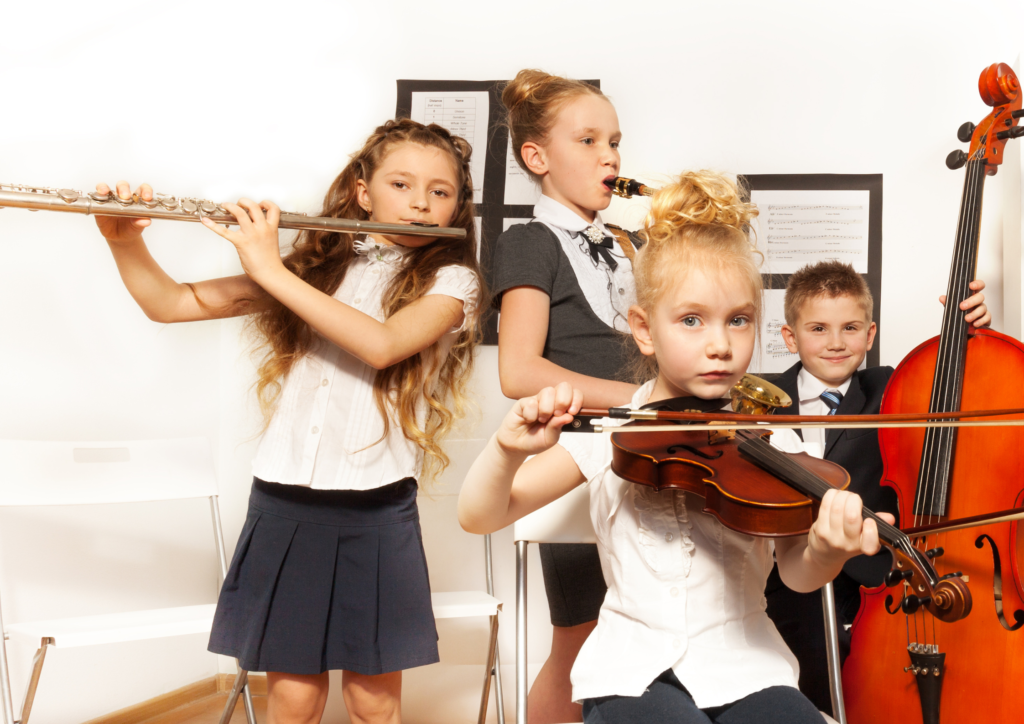
One of the most beautiful things about group music lessons is that children make real progress — even without pressure or long hours of practice at home. In today’s busy world, many kids don’t have time to sit at the piano or guitar every day, and that’s perfectly okay. Group lessons create an environment where they can still grow through repetition, rhythm games, and fun teamwork during class time.
In my group instrumental lessons at school, we review chords, notes, and rhythms every week in different ways — clapping, echoing, or playing together in rounds. Students hear patterns repeatedly without feeling like they’re “practising.” It becomes play instead of work. And because everyone is learning together, they don’t feel left behind — they feel supported.
I once had a student who rarely practised at home, but in our small group guitar class, he improved faster than I expected. The mix of encouragement, friendly competition, and peer energy kept him engaged. When he saw others play confidently, he wanted to join in too — and that motivation was enough to keep him progressing week after week.
Children learn best when they feel relaxed and inspired, not pressured. In group lessons, they stay motivated simply because they’re having fun. The music grows naturally, and so does their confidence.
Affordable and Accessible for Families
Another wonderful benefit of group music lessons is that they make learning an instrument more affordable and accessible for families. Private lessons can be expensive, and not every family can commit to them long-term. But with small group instrumental classes, more children can experience the joy of learning music without it becoming a financial strain.
In many of the schools where I teach, group lessons have opened doors for students who might never have had the chance to learn piano, guitar, or ukulele otherwise. Parents often tell me how grateful they are that their child can still receive quality instruction in a small, supportive group setting — especially during school hours.
Group lessons also make scheduling easier for schools and families. Instead of juggling multiple one-on-one lessons, teachers can reach more students at once while keeping lessons interactive and engaging. The classroom fills with energy — strumming, laughter, and shared progress — and children learn not only from the teacher but also from each other.
Music education should be something every child can enjoy, not a privilege for a few. That’s why I love offering group music lessons in schools — they bring the magic of music to more children, build confidence, and create a community of young musicians learning together.
Builds Natural Performance Confidence
Performing in front of others can be intimidating for children — even those who love music. But one of the biggest advantages of group music lessons is that they naturally help kids overcome stage fright and build performance confidence from the very beginning.

In small group instrumental lessons, children perform every week without even realising it. They play short pieces for each other, practise duets, or take turns leading a rhythm. This constant exposure makes performing feel normal, not scary. When the time comes for a school concert or end-of-term showcase, they already know what it feels like to play in front of others — and they’re excited, not nervous.
I’ve seen this transformation many times. A student who could barely play a few notes alone during the first week will happily perform with friends by the end of term. In our group guitar and ukulele concerts, even the shyest students beam with pride when the audience claps. Playing as part of a team gives them courage — the sound of everyone strumming together gives them confidence to keep going.
Group learning turns performing into a shared experience rather than a solo challenge. Children learn that mistakes are part of the process, and that music sounds best when everyone supports one another. Those little performances — week by week — quietly shape confident, joyful musicians who aren’t afraid to share their talent.
How I Teach My Group Music Lessons
My group music lessons are designed to be structured, engaging, and fun — so every child learns something new each week while building confidence and teamwork. A typical 30-minute class follows a clear routine that keeps students focused and active from start to finish:
- Warm-up:
We sit together in a circle and start with short technical exercises or rhythm games. Students practise left- and right-hand coordination, simple fingerpicking or strumming patterns, and small chord movements to warm up their hands. This builds strength, control, and focus. - Main activity (middle of the lesson):
We learn one short song or exercise. Sometimes we use a method book so students can read notes and rhythms. Other times, I play a backing track or slowed-down song from my YouTube channel (e.g. ‘We Will Rock You’), and we all play along together. We practise small beginner chords or full chord shapes while keeping time with the music. - Duet or small-group work (last 10 minutes):
I divide the class into pairs or small groups so they can practise playing together.- One student might play the melody, the other the chords.
- Sometimes one plays on a single string while the other strums.
- They might also switch roles — one playing bass notes, the other rhythm.
This teamwork helps them develop listening, coordination, and ensemble skills.
- Game or fun activity (if time allows):
We often finish with a quick group guitar or ukulele game — something musical that reinforces rhythm or chords while keeping the lesson light and enjoyable.
(I’ll share more of my favourite group games and exercises in another article!)
This simple, consistent structure helps students feel comfortable and motivated. Each lesson includes technique, creativity, and play — so children always leave feeling proud of what they achieved and excited for the next class.
Want Ideas for Group Guitar or Ukulele Songs?
If you’d like inspiration for group guitar or ukulele songs, simple arrangements, or fun ways to teach kids in small groups — I share lots of ideas on my Mrs A YouTube Channel.
You’ll find:
- Easy duet arrangements for beginners — one student plays chords, the other plays melody.
- Short, familiar pop and movie songs arranged for group classes.
- Creative teaching tips and classroom ideas to make group music learning fun and structured.
🎵 Subscribe to Mrs A on YouTube to get fresh weekly tutorials and ideas for your next group lesson — whether you teach at school, in your studio, or just want to play along with your kids at home.
Because the best way to make music exciting for children is to play songs they love — together.
Final Thoughts
Group music lessons are not only an affordable and effective way to teach — they’re often the most joyful. For many children, learning in a small group is where everything “clicks.” They stay motivated, gain confidence, and discover that music is something to share, not to fear.
Whether it’s strumming guitars, playing ukulele duets, or learning piano in pairs, I’ve seen time and again that some kids simply learn better together. The laughter, teamwork, and energy in these sessions are what make them truly special.
If you’re a parent or teacher thinking about trying group lessons, I encourage you to give it a go. Start small, keep it fun, and focus on songs children love. You might be surprised by how much progress and joy can happen in just 30 minutes a week.
Because when kids make music together — they grow together.

Hi, I’m Veronika – Mrs A, a passionate music teacher and the creator of Smiley Note.
I teach piano, guitar, ukulele, and flute to beginners of all ages, and I help teachers and parents make learning music simple, creative, and fun.
After years of teaching in Australian primary schools, I’ve learned that children learn best when music feels joyful and pressure-free. My approach focuses on playing real songs, using imagination, and building confidence through small, meaningful progress.
I love showing parents how to enjoy music with their kids, and helping new teachers start their own flexible, school-hours teaching careers. Through my videos, printables, and courses, I share everything I’ve learned about making lessons engaging and enjoyable — even for complete beginners.