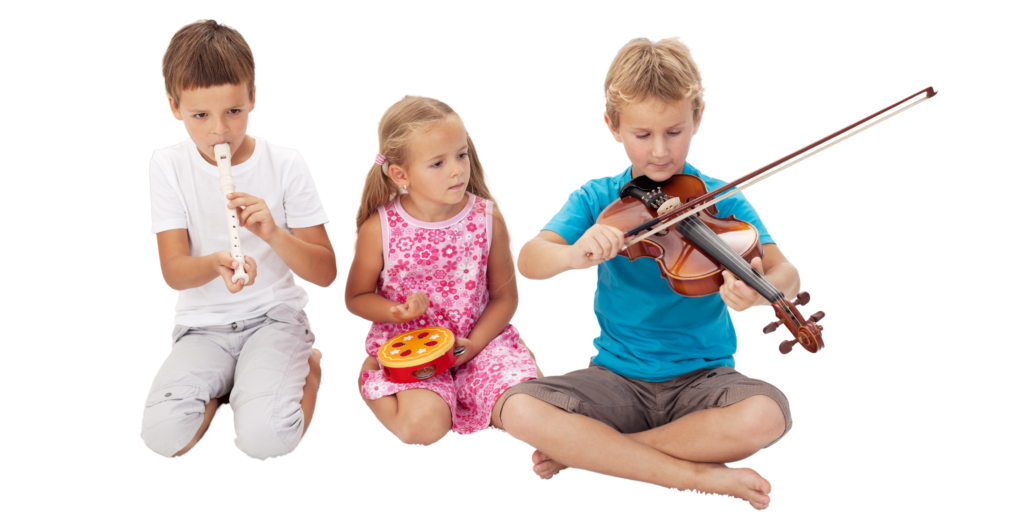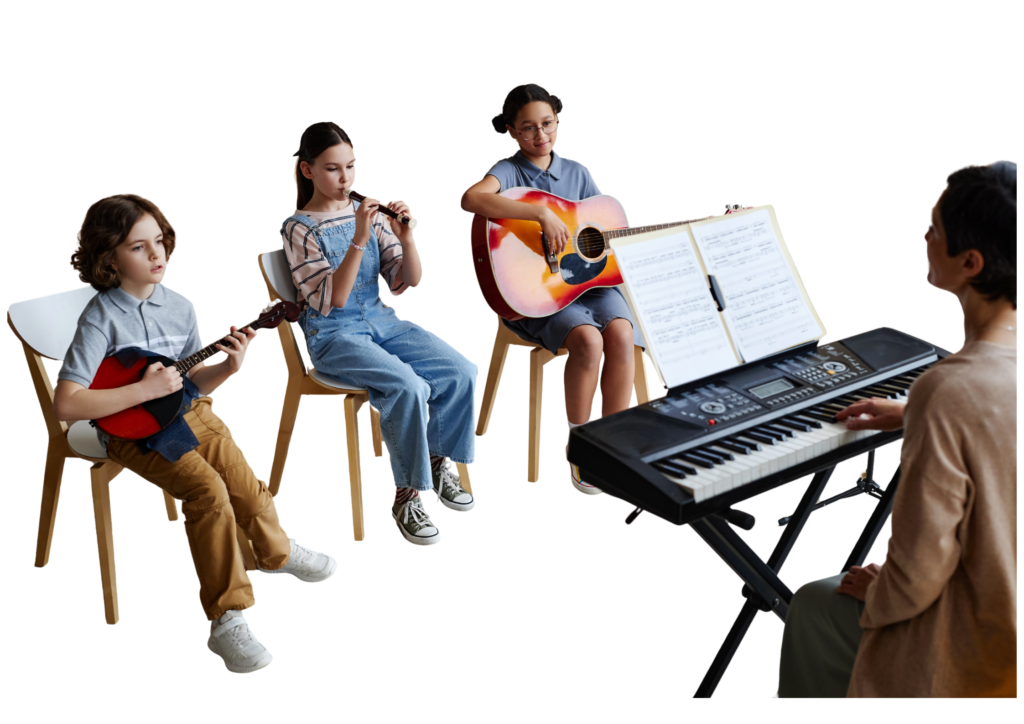
I’ve learned over the years why learning music should be simple and fun — because when it’s not, children lose interest very quickly. I grew up learning music the serious, traditional way. Everything had to be perfect: correct hand position, strict theory, exams, and hours of practice. For a long time, I thought that was how music was supposed to be taught, and I was fully prepared to teach in that same way.
But when I started teaching instrumental lessons in Australian schools for a music agency, I was honestly surprised. Many students who had already been taking lessons couldn’t read notes, didn’t understand even basic theory, or played piano pieces just by finger numbers. Some still didn’t have the correct hand position. And the biggest issue — they weren’t enjoying music at all.
That’s when I decided to change my approach. I wanted my lessons to be simple, creative, and full of fun — where children could learn through songs, stories, and games instead of stress or pressure. Now, every week I see the difference. When learning feels enjoyable and relaxed, students make real progress and actually want to keep learning.
This article is about that journey — how simplifying music instrumental lessons can make learning easier, happier, and much more effective for every child.

When Music Learning Became Too Serious
Over the years, traditional music lessons have become more serious and structured — focused on exams, long theory work, and hours of practice. There is nothing wrong with that approach at all. It can be wonderful if a child enjoys it, has supportive parents, and can practise regularly at home. Some children truly thrive in that environment, and teachers who guide students through exams do amazing work.
But when I started teaching music education in primary schools, I realised that school lessons are a very different world. My students often come straight from class, tired and distracted. Most don’t have time to practise at home, and parents are usually too busy to sit down and help. I quickly saw that the same “serious” system simply didn’t work here.
Some children I taught couldn’t read notes after several terms of lessons, didn’t know basic music theory, or played piano pieces just by finger numbers. They were trying their best but weren’t learning how music actually works. I needed to find a new way — a way to help them learn and progress without relying on home practice.
That’s when I realised that for school lessons, the key is to make learning simple, clear, and fun.
The Problem with Traditional Music Lessons
Traditional lessons often expect children to practise daily, remember complex theory, and perform in exams. This can make beginners feel pressured or even scared of making mistakes. Without fun or creativity, lessons can quickly become routine and mechanical — and that’s when children start losing interest.
Especially in school settings, where kids have short attention spans, beginner music lessons need to be engaging, playful, and easy to follow. When learning feels achievable and enjoyable, students start to believe that music is something they can do — not something only “talented” people can.
Traditional programs such as AMEB or Trinity College London focus on structured exams and graded progress — a great option for students who thrive in formal learning settings.
I was actually prepared to teach students for exams — that’s the way I was taught myself. My own music education was very traditional, focused on theory, technique, and graded progress. So when I started teaching, I thought preparing students for exams was the natural path to follow. When a parent asked me to prepare their child for an AMEB exam, I bought the books, did all the research, and followed the program carefully. But after about six months, the student lost interest, and the parent also decided they didn’t want to keep committing to the extra practice and expectations. To be honest, I didn’t enjoy it either. That experience made me realise that exam-focused teaching wasn’t the right fit for me or for most of the students I work with. I wanted lessons to feel more creative, flexible, and enjoyable — the kind that keep children learning and loving music for years.

The Power of Keeping Music Simple
Over time, I discovered that children don’t need complicated lessons to learn music. They need simple, clear, and enjoyable experiences that help them understand what they’re doing.
For my Prep students learning piano or ukulele during school hours (5–6 years old), I noticed that simple, visual, and playful learning works best. That’s why I created Smiley Note—my own set of colourful, friendly music theory resources.
Many students I met at schools couldn’t remember:
- what a treble clef looks like
- what a semibreve or time signature means
- or even the names of the notes on the staff
They were trying hard but not remembering much, because the lessons were too serious or too abstract. By keeping things simple and visual, everything started to click.
With Smiley Note, children learn through:
- short stories that explain music ideas
- bright visuals that make notes easy to recognise
- games and repetition that make learning fun
This approach helps them actually remember what they learn. They build real understanding—not just memorising finger numbers or copying sounds.
In my beginner music lessons, I also ask what songs children like to listen to. We then learn an easy version of that song—
- with the correct hand position
- naming the keys and fingers
- and slowly connecting sounds with note names
When music feels familiar and enjoyable, children stay motivated. Even without much practice at home, they still progress and remember what they’ve learned.
That’s the real power of keeping music simple: it helps children succeed, stay confident, and enjoy learning every step of the way.

Why Fun Matters in Music Education
Through my years of teaching, I’ve learned that when lessons are fun, children remember more, try harder, and feel proud of what they can do. Fun doesn’t mean silly or unstructured—it means learning in a way that feels achievable, creative, and rewarding.
In many instrumental programs in schools, students often face pressure to play everything correctly or prepare for exams., students often face pressure to play everything correctly or prepare for exams. But for most beginners, especially in schools, that kind of approach can feel stressful. When lessons are playful and relaxed, children feel safe to make mistakes and try again.
I’ve seen how adding small, enjoyable elements changes everything. We might clap a rhythm together, turn music theory into a quick game, or create a short melody as a group. Activities like these help students understand the music they are playing rather than just memorising it.
Making beginner music lessons enjoyable also helps children develop skills that go far beyond music.
- They learn to focus and listen carefully.
- They build patience and confidence.
- They start to express themselves freely and enjoy learning.
The best part is watching how these positive feelings grow each week. A fun lesson turns into motivation. A small success leads to confidence. And that’s how children begin to love music for life.

Why Learning Music Should Be Simple and Fun – The Benefits
⭐ Builds Confidence
When lessons are simple and enjoyable, children experience success early. Playing their first song or clapping a rhythm correctly makes them feel proud and excited to learn more. Small achievements in beginner music lessons build lasting confidence and motivation.
⭐ Improves Understanding
Clear, step-by-step learning helps students truly understand how music works. Instead of memorising finger numbers or patterns, they start recognising note names, rhythms, and sounds. This kind of fun music learning gives them real knowledge that lasts.
⭐ Encourages Creativity
When children feel relaxed, they’re not afraid to explore or make mistakes. Simple activities like creating short rhythms or improvising on familiar tunes help them express themselves freely. Creativity grows naturally when learning feels safe and playful.
⭐ Keeps Students Engaged
Games, songs, and small challenges keep students focused and excited. In music education in Australia, this is especially important during school hours when children are often tired or distracted. Fun keeps their attention and turns learning into something they look forward to.
⭐ Supports Memory and Focus
Children remember better when they move, play, and repeat ideas in creative ways. Clapping rhythms, singing note names, or matching flashcards strengthens both focus and memory. These activities make learning feel like play instead of study.
Research from The Conversation shows that music supports children’s focus, creativity, and emotional development.
⭐ Reduces Pressure and Anxiety
A relaxed classroom atmosphere helps children learn without fear of mistakes. They start to see music as something joyful rather than stressful. This positive mindset builds confidence and helps every student feel successful at their own pace.
⭐ Builds a Lifelong Love for Music
When learning feels fun, children connect music with happiness. They’re more likely to keep playing, join school bands, or take lessons later in life. This is one of the biggest reasons why learning music should be simple and fun—it inspires a love that lasts well beyond childhood.
I’ve seen how true this is in my own teaching. Over time, this simple and fun approach has built up more and more students for me. I often receive kind emails from parents saying their children finally enjoy music and look forward to lessons again. As teachers, that’s what we all want — to keep students learning, not losing interest.
If you’re a teacher who would like to build your own music business in schools, I’ve shared exactly how I started and grew mine in my article How to Teach Music at Primary Schools. It explains how teaching during school hours can give you a stable income and the freedom to choose your own schedule.
⭐ Works for Every Child
Not every student practises at home or learns the same way, and that’s okay. Fun, flexible lessons can reach every type of learner—from shy beginners to energetic kids who love to move. Simple teaching methods make progress possible for all.
⭐ Encourages Independence
When lessons are achievable and interesting, children begin to explore on their own. They try new songs, experiment with sounds, and learn to fix mistakes without help. This independence is a sign of real musical growth.
⭐ Strengthens the Connection Between Teacher and Student
Shared laughter and creativity help build trust in the classroom. When students enjoy learning with their teacher, they feel supported and confident to keep going. Music lessons become a positive, memorable part of their school experience.

How to Make Learning Music Simple and Fun
Over the years, I’ve learned why learning music should be simple and fun—because that’s when children truly learn and enjoy the process. When lessons are clear, playful, and creative, students stay engaged and start building real understanding, even without long practice sessions at home.
In my school lessons, I always focus on small, achievable goals. Instead of rushing through pieces or heavy theory, we take time to explore simple concepts that children can actually remember. For example, we might spend a few minutes learning the rhythm of a song by clapping it, finding the beat on percussion instruments, or recognising patterns on the piano keys. These short, practical activities make beginner music lessons much easier to understand.
I often use my Smiley Note resources with younger students because they make music theory fun and visual. When children can see colourful notes and characters, it becomes much easier to remember symbols like the treble clef or time signature. They start recognising notes naturally, without feeling like they are “studying.”
I also make sure to include songs that children love. I always ask, “What do you enjoy listening to?” Then we learn a simple version of that song, using the correct hand position, finger numbers, and note names, or even simple chords. When they hear a tune they recognise, it gives them instant excitement and confidence.
Keeping lessons simple doesn’t mean lowering expectations—it means breaking things down in a way that works for real children in real classrooms. It’s about teaching music in a way that fits their world: full of curiosity, movement, and joy. And that’s how progress happens—step by step, with a smile.
Final Thoughts
I’ve seen in my own teaching how much difference it makes when lessons are relaxed, clear, and joyful. Children learn faster, remember more, and feel proud of their progress. The truth is, music doesn’t need to be complicated or full of pressure to be meaningful.
That’s why learning music should be simple and fun. When children can explore music through songs they love, colourful visuals, and playful activities, they connect to it emotionally. They don’t just follow instructions — they understand, create, and enjoy what they’re doing.
Whether it’s piano, guitar, or ukulele in a small group, or one-on-one, I’ve seen that keeping lessons simple and fun helps students learn faster, stay motivated, and truly enjoy their music lessons. I always remind myself that every lesson is a chance to make music enjoyable and achievable. With the right approach, every child — no matter their background or ability — can learn, progress, and discover the joy of making music.
Because when learning feels simple and fun, it stays with them for life.
About Mrs A

Hi, I’m Veronika – also known as Mrs A.
I’m a passionate music teacher, mum, and creator of Smiley Note and Music with Mrs A. After completing my music education in Europe, I spent years performing in bands, orchestras, and choirs — but my true calling turned out to be helping children discover the joy of music.
When I moved to Australia, I found my dream path — teaching instrumental music at primary schools during school hours. It allowed me to combine my love for music, teaching, and family life. No stress, no late nights — just meaningful, happy work that makes a difference.
Through my articles, videos, and resources, I now help music teachers, aspiring educators, and parents find joy and confidence in teaching and learning music the simple way — through fun songs, group lessons, and connection.
If you’d like to learn more about building your own music teaching career during school hours, or just want inspiration to bring more music into your life, you’re in the right place.